Material comparison

Stainless steel 316L vs Stainless Steel: which one?

Corrosion resistant, ductile and weldable; food, medical and marine. Metal parts with FDM: 316L stainless steel. So which one is right for your project? Compare the values, strengths and weaknesses side by side.

Stainless steel 316L

316L by laser powder bed fusion

316L is a molybdenum-alloyed austenitic stainless steel. 316L parts printed with LPBF offer high corrosion resistance and ductility, making them suitable for food equipment, medical instruments and parts in marine environments.

Strength4
Stiffness5
Toughness / impact5
Heat resistance5
Chemical resistance5
UV / outdoor5
Detail and surface3
Ease of production2
Stainless steel 316L page →
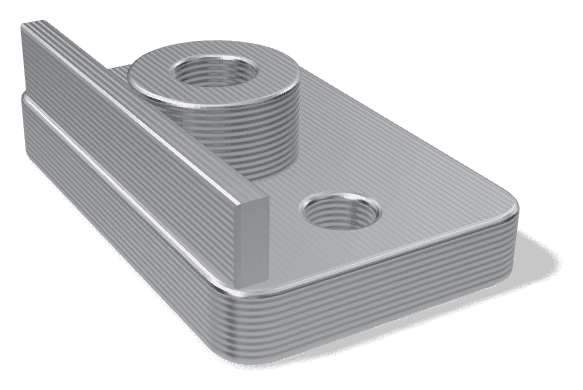
Sample part made from Stainless Steel

Stainless Steel

BASF Ultrafuse® 316L metal composite filament

Ultrafuse® 316L is a stainless steel composite filament developed by BASF. Grade 316L is preferred in industrial applications and prototyping for its durability, corrosion resistance and mechanical properties. It makes it possible to produce complex metal parts with FDM.

Strength4
Stiffness5
Toughness / impact4
Heat resistance5
Chemical resistance4
UV / outdoor5
Detail and surface2
Ease of production1
Stainless Steel page →

Values

Technical comparison

PropertyStainless steel 316LStainless Steel
Density7.9 g/cm³7.9 g/cm³
Tensile strength600 MPa530 MPa
Elongation at break38 %50 %
Modulus (stiffness)190 GPa190 GPa
Heat deflection (0.45 MPa)——
  • Stainless steel 316L has higher tensile strength: 600 MPa, versus 530 MPa for Stainless Steel.
  • Stainless Steel stretches further before breaking: 50 %, versus 38 % for Stainless steel 316L.
  • In terms of stiffness, Stainless steel 316L (190 GPa) and Stainless Steel (190 GPa) are close.

Decision

Which one, and when?

Choose Stainless steel 316L if…

  • Toughness / impact matters more
  • Chemical resistance matters more
  • Detail and surface matters more
  • Ease of production matters more
  • you are making food and pharmaceutical equipment
  • you are making medical instruments
  • you are making marine parts

Choose Stainless Steel if…

  • you are making industrial design
  • you are making spare part production
  • you are making custom metal parts

Good to know

Stainless steel 316L vs Stainless Steel: frequently asked questions

Which is stronger: Stainless steel 316L or Stainless Steel?

Stainless steel 316L has higher tensile strength: 600 MPa, versus 530 MPa for Stainless Steel.

Which is more heat resistant: Stainless steel 316L or Stainless Steel?

Stainless Steel stretches further before breaking: 50 %, versus 38 % for Stainless steel 316L.

Which is easier to produce?

Stainless steel 316L is usually easier to produce; it needs less special equipment and tuning.

Which is more economical?

Price levels are similar; the exact price depends on the part and quantity.

Which one is right for your part?

Tell us the operating conditions; let's decide together which of the two fits, or find a better alternative.