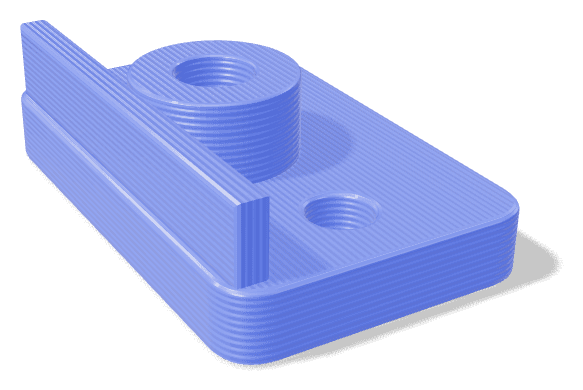
Most popularPLA
Polylactic acid (PLA+)
PLA is an organic biopolymer made from corn starch and sugarcane. It is one of the lowest-cost filaments, prints easily and gives a glossier surface than ABS. It is a safe choice for many projects.
Material comparison
The most common, most affordable and easiest filament to print. High detail and smooth surfaces; the core resin for visual models and prototypes. So which one is right for your project? Compare the values, strengths and weaknesses side by side.
Most popularPolylactic acid (PLA+)
PLA is an organic biopolymer made from corn starch and sugarcane. It is one of the lowest-cost filaments, prints easily and gives a glossier surface than ABS. It is a safe choice for many projects.
General-purpose SLA photopolymer
Standard resins are general-purpose photopolymers offered in colors such as grey, white and black. Thanks to very fine detail and smooth surfaces, they are ideal for presentation models, figures and form-fit prototypes. Mechanically they are hard but brittle under impact.
Values
| Property | PLA | Standard resin |
|---|---|---|
| Density | 1.23 g/cm³ | 1.18 g/cm³ |
| Tensile strength | 63 MPa | 60 MPa |
| Elongation at break | 20 % | 6 % |
| Modulus (stiffness) | 1.97 GPa | 2.6 GPa |
| Heat deflection (0.45 MPa) | 53 °C | 70 °C |
Decision
Good to know
In terms of tensile strength, PLA (63 MPa) and Standard resin (60 MPa) are close.
Standard resin is more heat resistant: 70 °C, versus 53 °C for PLA.
PLA is usually easier to produce; it needs less special equipment and tuning.
In general, PLA is more economical. The exact price is set in the quotation based on part size, quantity and technology.
Tell us the operating conditions; let's decide together which of the two fits, or find a better alternative.