FDM · Filaments · Standard
PLA filament
The most common, most affordable and easiest filament to print.
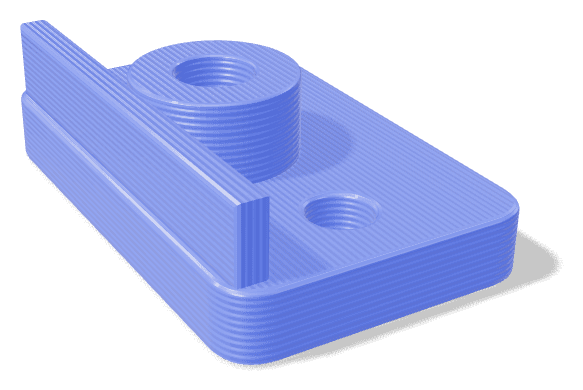 Most popular
What is PLA?
PLA is an organic biopolymer made from corn starch and sugarcane. It is one of the lowest-cost filaments, prints easily and gives a glossier surface than ABS. It is a safe choice for many projects.
Not suitable for applications with continuous, direct exposure to heat.
- Economical
- Fine detail
Fast and economical
The lowest-cost and fastest filament to print; ideal for first prototypes and visual models.
Surface and color
Gives a glossy, clean surface and stands out in presentation models with its wide color range.
Heat limit
Its heat deflection temperature is about 53 °C; not suitable for direct sun, car interiors or hot environments.
Eco-friendly
A plant-based biopolymer, safely used in LED and decorative products.
Technical data
Manufacturer datasheet values.
| Density | 1.23 g/cm³ |
|---|---|
| Heat deflection temperature (0.45 MPa) | 53 °C |
| Melt flow index (g/10 min) | 5 (190 °C / 2.16 kg) |
| Tensile strength | 63 MPa |
| Elongation at break | 20% |
| Flexural strength | 74 MPa |
| Flexural modulus | 1973 MPa |
| Izod impact strength | 9 kJ/m² |
| Glass transition temperature (Tg) | ≈ 60 °C (typical) |
Print settings
Recommended starting ranges; fine-tuning is needed for each machine.
| Nozzle temperature | 210 – 230 °C (recommended 215 °C) |
|---|---|
| Bed temperature | 45 – 60 °C |
| Fan | 100% |
| Print speed | 40 – 100 mm/s |
Design guidelines for PLA
General guidelines for FDM technology. All design guidelines
- Production accuracy at TAݱ0.5% (lower limit ±0.5 mm)
- Minimum wall thickness0.8 mm (supported)
- Unsupported wall1.2 mm
- Smallest detail0.4 mm
- Clearance for moving parts0.4 mm (normal fit)
- Text and logosEmbossed ≥ 0.6 mm, engraved ≥ 0.8 mm
- Minimum hole diameterØ 2 mm
- Unsupported overhang angle≥ 45° from horizontal; flatter surfaces need support
Applications
- Visual prototypes and models
- LED projects and lamps
- Figures, decor and gifts
- Fit-check parts
Advantages
- The most economical and fastest filament to print
- High dimensional stability, does not warp
- Glossy surface and a wide range of colors
- Plant-based biopolymer
Limitations
- Low heat resistance (~53 °C)
- Brittle under impact
- Can degrade in prolonged sunlight
Comparison
PLA and alternatives
| Property | PLA | PETG | ABS | Standard resin |
|---|---|---|---|---|
| Density | 1.23 g/cm³ | 1.27 g/cm³ | 1.06 g/cm³ | 1.18 g/cm³ |
| Tensile strength | 63 MPa | 52 MPa | 40 MPa | 60 MPa |
| Elongation at break | 20 % | 83 % | 30 % | 6 % |
| Modulus (stiffness) | 1.97 GPa | 1.07 GPa | 1.2 GPa | 2.6 GPa |
| Heat deflection (0.45 MPa) | 53 °C | 64 °C | 73 °C | 70 °C |
Values are averages of typical ranges; see each material page for details.
Good to know
Frequently asked questions about PLA
What is PLA?
PLA is an organic biopolymer made from corn starch and sugarcane. It is one of the lowest-cost filaments, prints easily and gives a glossier surface than ABS. It is a safe choice for many projects.
Is PLA heat resistant?
The heat deflection temperature (0.45 MPa) of PLA is about 53 °C. This is low; it is not suitable for hot car interiors, direct sun or hot water.
Can PLA be used outdoors?
It can degrade under prolonged sunlight and UV light. For outdoor use, ASA or another UV-resistant material should be preferred.
Which parts are made with PLA?
PLA is typically used in applications such as visual prototypes and models, led projects and lamps, figures, decor and gifts, fit-check parts.
Which material can be used instead of PLA?
Depending on the application, PETG, ABS, Standard resin can be alternatives. You can see the differences in the comparison tables on the material pages.
Does TAİ Robotik produce with PLA?
Yes. We produce with PLA using FDM technology. Upload your file to get a quote.
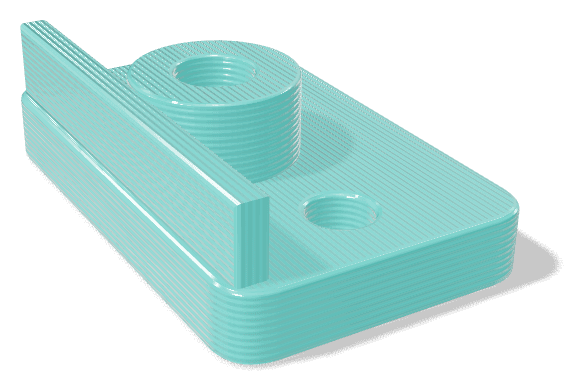
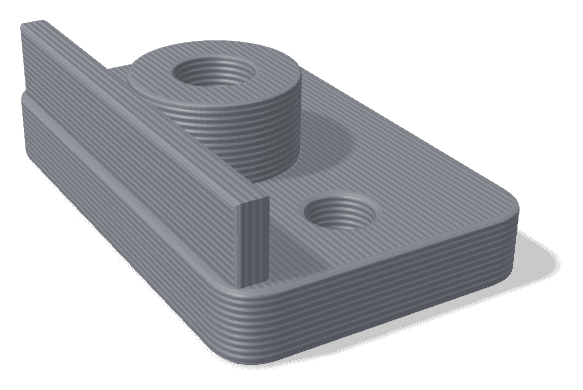
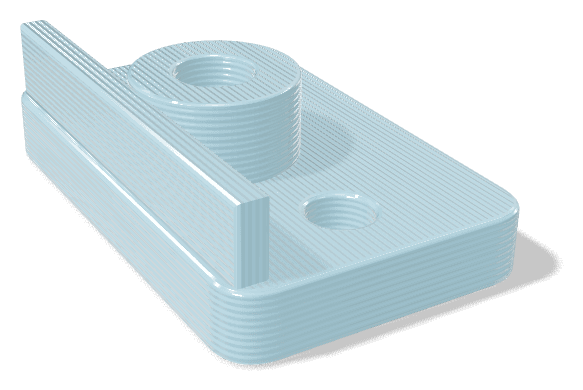
Let's produce with PLA
Upload your file and we will prepare your quotation for the material, color and quantity.