Material extrusion
What is FDM and how does it work?
The world's most common 3D printing technology, building parts by depositing molten thermoplastic filament layer by layer through a nozzle.
Fused Deposition Modeling
FDM (Fused Deposition Modeling) is also known as FFF (Fused Filament Fabrication). Thermoplastic filament from a spool is melted in a heated nozzle and deposited layer by layer along a computer-generated path. Each layer fuses to the one below to form a solid part. Thanks to its low cost, wide material range and large build sizes, it is the most widely used method from prototypes to end-use parts.
| Typical tolerance | ±0.5% (lower limit ±0.5 mm); industrial ±0.3% |
|---|---|
| Layer thickness | 100 – 300 µm |
| Minimum wall thickness | 0.8 mm |
| Typical build size | Varies by machine; large-format models are common |
| Surface | Visible layer lines; improved with sanding, primer and paint |
| Supports | Needed for overhangs flatter than 45° from horizontal |
Process
FDM step by step
- 01
Filament is fed from the spool into the extruder.
- 02
The heated nozzle melts the filament (typically 190 – 400 °C).
- 03
The nozzle moves in the X-Y plane, drawing the outlines and infill of the layer.
- 04
The bed moves down one layer or the nozzle moves up; the process repeats.
- 05
Supports are removed and surface finishing is done if needed.
Advantages
- The most economical 3D printing method
- Very wide material range from PLA to carbon fiber nylon
- Large parts in one piece
- Functional, durable parts
- Multicolor printing possible
Limitations
- Visible layer lines
- Lower strength in the Z axis (between layers)
- Behind resin technologies for very fine detail
Best suited for
- Functional prototypes
- Fixtures, jigs and tooling
- Enclosures and brackets
- Spare parts
- Low-volume production
Design
FDM design guidelines
- Minimum wall thickness0.8 mm
- Smallest detail0.4 mm (nozzle diameter)
- Minimum hole diameterØ 2 mm
- Overhang angle≥ 45° from horizontal; flatter surfaces need support
- Clearance for moving parts0.3 – 0.6 mm
- Text and logosEmbossed ≥ 0.6 mm, engraved ≥ 0.8 mm
Surface and assembly
Post-processing
- Support removal
- Sanding
- Primer and paint
- Vapor smoothing (ABS/ASA)
- Tapping and heat-set inserts
Materials
Materials printed with FDM
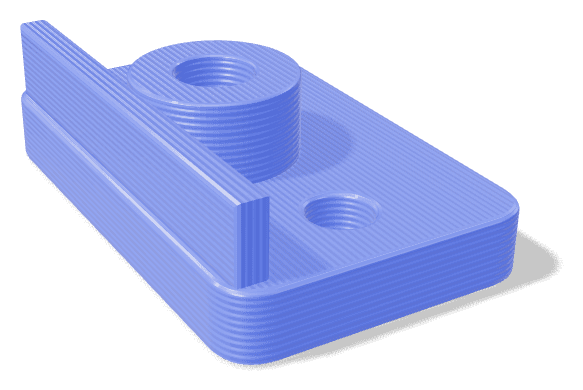 Most popular
PLA
Polylactic acid (PLA+)
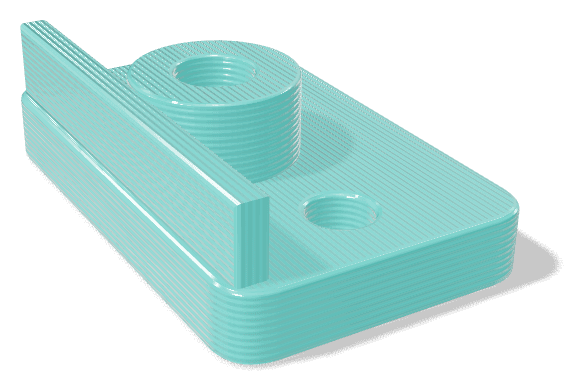 Most popular
PETG
Polyethylene terephthalate glycol
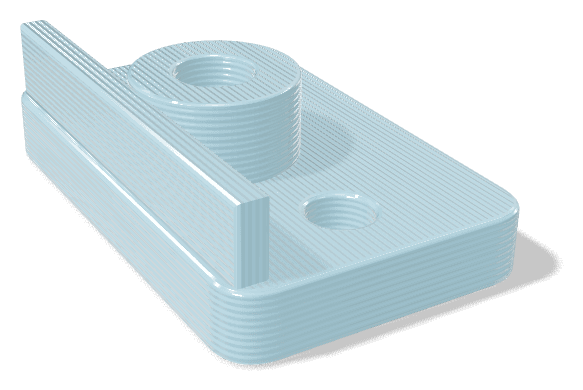
PET
Polyethylene terephthalate filament
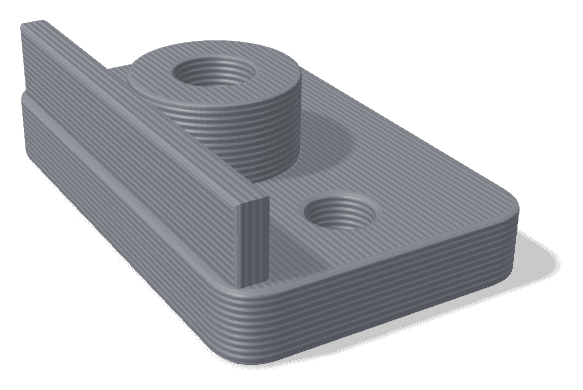 Most popular
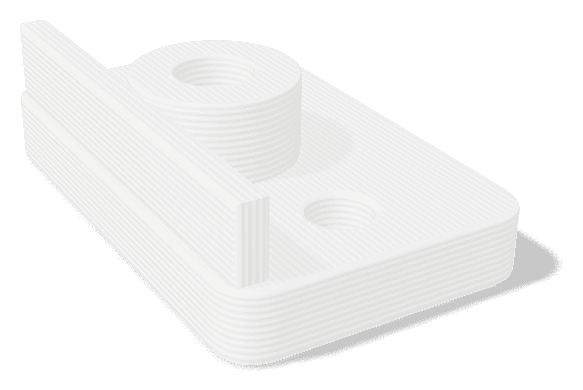
ABS
Acrylonitrile butadiene styrene (ABS+)
 Most popular
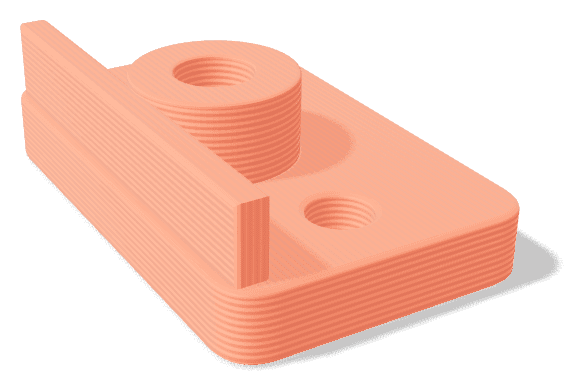
ASA
Acrylonitrile styrene acrylate
 Most popular
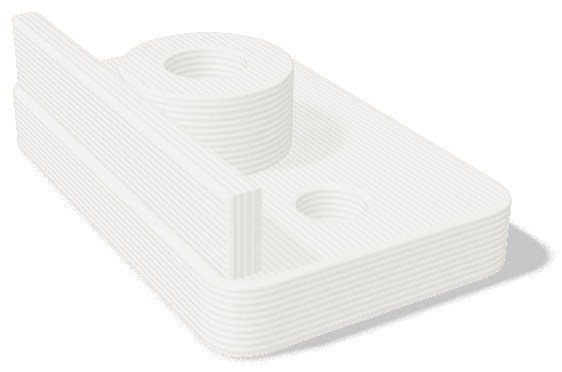
TPU 95A
Thermoplastic polyurethane
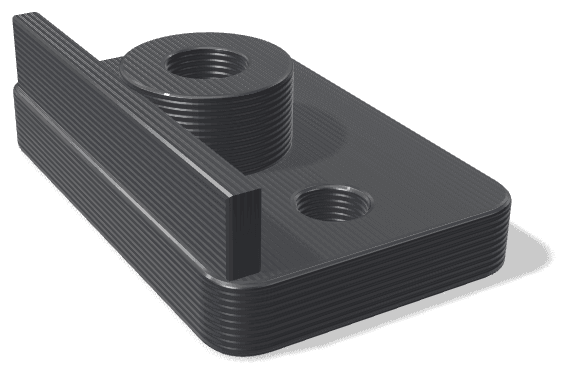
Nylon (PA6 / PA12)
Polyamide filament
PA-CF
Carbon fiber reinforced nylon (PA6-CF / PA12-CF)
Good to know
Frequently asked questions about FDM
What is FDM?
FDM (Fused Deposition Modeling) is also known as FFF (Fused Filament Fabrication). Thermoplastic filament from a spool is melted in a heated nozzle and deposited layer by layer along a computer-generated path. Each layer fuses to the one below to form a solid part. Thanks to its low cost, wide material range and large build sizes, it is the most widely used method from prototypes to end-use parts.
How does FDM work?
Filament is fed from the spool into the extruder. The heated nozzle melts the filament (typically 190 – 400 °C). The nozzle moves in the X-Y plane, drawing the outlines and infill of the layer. The bed moves down one layer or the nozzle moves up; the process repeats. Supports are removed and surface finishing is done if needed.
What applications is FDM suitable for?
FDM is especially suitable for functional prototypes, fixtures, jigs and tooling, enclosures and brackets, spare parts, low-volume production.
How accurate are FDM parts?
Typical tolerance is ±0.5% (lower limit ±0.5 mm); industrial ±0.3%. The exact value depends on the machine, material and part geometry.
Does TAİ Robotik produce with FDM?
Yes. We produce with FDM; upload your file to get a quote.
Other technologies
Let's talk about your project
Send us your idea and any design you have; our project support team will get back to you as soon as possible.