FDM · Filaments · Flexible
TPU 95A filament
Flexible, elastic and shock absorbing; for rubber-like parts.
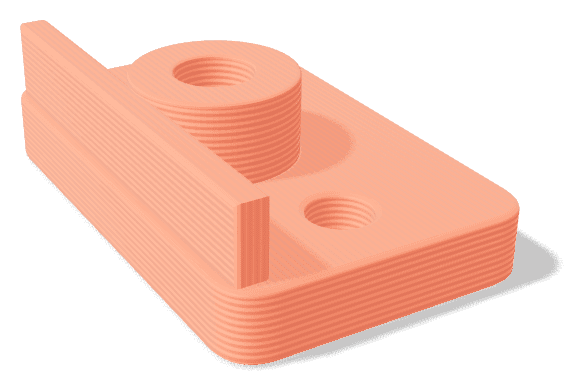 Most popular
What is TPU 95A?
TPU 95A is a medium-hard flexible material with a hardness of 95 Shore A. It is used in parts that need flexibility and shock absorption, for both prototypes and end products of rubber-like items.
Prints slowly; drying at 55 °C for more than 4 hours before printing is recommended.
- Flexible
- Chemical resistant
Flexible and elastic
95 Shore A hardness; bends, squashes and returns to shape. Elongation at break exceeds 800%.
Shock absorption
Absorbs vibration and impact; ideal for bumpers, gaskets and protective cases.
Abrasion resistance
Resists fatigue and wear; long-lasting in constantly moving and rubbing parts.
Printing note
Prints slowly and carefully; consult our engineers where very tight fits are required.
Technical data
Manufacturer datasheet values.
| Density | 1.21 g/cm³ |
|---|---|
| Melt flow index (g/10 min) | 1.2 (190 °C / 2.16 kg) |
| Tensile strength | 35 MPa |
| Elongation at break | ≥800% |
| Hardness | 95 Shore A |
Print settings
Recommended starting ranges; fine-tuning is needed for each machine.
| Nozzle temperature | 220 – 250 °C (recommended 240 °C) |
|---|---|
| Bed temperature | 45 – 60 °C |
| Fan | 100% |
| Print speed | 20 – 50 mm/s |
Design guidelines for TPU 95A
General guidelines for FDM technology. All design guidelines
- Production accuracy at TAݱ0.5% (lower limit ±0.5 mm)
- Minimum wall thickness1.2 mm (supported)
- Unsupported wall1.6 mm
- Smallest detail0.4 mm
- Clearance for moving parts0.4 mm (normal fit)
- Text and logosEmbossed ≥ 0.6 mm, engraved ≥ 0.8 mm
- Minimum hole diameterØ 2 mm
- Unsupported overhang angle≥ 45° from horizontal; flatter surfaces need support
Applications
- Shoe soles
- Phone and device cases
- Gaskets and hinge covers
- Bumpers and dampers
Advantages
- Stretches and springs back like rubber
- Highly resistant to abrasion and fatigue
- Resists oil and grease
Limitations
- Prints slowly
- Struggles with fine detail and bridging
- Absorbs moisture; must be dried
Comparison
TPU 95A and alternatives
| Property | TPU 95A | TPU / TPE (SLS / MJF) | Flexible / elastic resin | Rubber-like photopolymer |
|---|---|---|---|---|
| Density | 1.21 g/cm³ | 1.1 g/cm³ | 1.1 g/cm³ | 1.15 g/cm³ |
| Tensile strength | 35 MPa | 9 MPa | 6 MPa | 3 MPa |
| Elongation at break | 800 % | 280 % | 130 % | 240 % |
| Modulus (stiffness) | — | 0.08 GPa | 0.01 GPa | 0.01 GPa |
| Heat deflection (0.45 MPa) | — | — | — | — |
Values are averages of typical ranges; see each material page for details.
Good to know
Frequently asked questions about TPU 95A
What is TPU 95A?
TPU 95A is a medium-hard flexible material with a hardness of 95 Shore A. It is used in parts that need flexibility and shock absorption, for both prototypes and end products of rubber-like items.
Is TPU 95A heat resistant?
The heat deflection value of TPU 95A varies by grade and application; for parts working in hot environments, you can consult our engineers.
Can TPU 95A be used outdoors?
It usually performs well in short and medium-term outdoor use; for parts exposed to direct sunlight for long periods, UV-resistant materials such as ASA are a better fit.
Which parts are made with TPU 95A?
TPU 95A is typically used in applications such as shoe soles, phone and device cases, gaskets and hinge covers, bumpers and dampers.
Which material can be used instead of TPU 95A?
Depending on the application, TPU / TPE (SLS / MJF), Flexible / elastic resin, Rubber-like photopolymer can be alternatives. You can see the differences in the comparison tables on the material pages.
Does TAİ Robotik produce with TPU 95A?
Yes. We produce with TPU 95A using FDM technology. Upload your file to get a quote.
Let's produce with TPU 95A
Upload your file and we will prepare your quotation for the material, color and quantity.