FDM · Filaments · Composite
ABS (CF · GF) filament
High-strength ABS for aerospace and automotive.
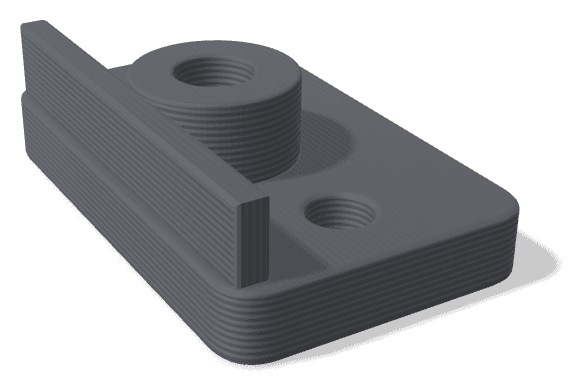
What is ABS (CF · GF)?
Glass fiber reinforcement increases tensile strength, improves thermal and chemical stability and reduces thermal expansion. Carbon fiber reinforcement delivers even higher performance, especially in tensile strength and stiffness.
Mechanical values vary with the reinforcement ratio; consult our engineers for your application.
- High strength
- Heat resistant
- Lightweight
Strength
Fiber reinforcement significantly increases the tensile strength and stiffness of ABS.
Thermal stability
Glass fiber improves thermal and chemical stability and reduces thermal expansion.
Demanding applications
For high-performance needs in aerospace, automotive and industrial mechanical parts.
Values
Mechanical values vary with the reinforcement ratio; data for your application is shared during quotation.
Technical data
Typical values compiled from common manufacturer datasheets; they vary by brand and grade.
| Reinforcement | Chopped carbon or glass fiber |
|---|---|
| Typical flexural modulus | 4 – 7 GPa (depending on reinforcement) |
Design guidelines for ABS (CF · GF)
General guidelines for FDM technology. All design guidelines
- Production accuracy at TAݱ0.5% (lower limit ±0.5 mm)
- Minimum wall thickness0.8 mm (supported)
- Unsupported wall1.2 mm
- Smallest detail0.4 mm
- Clearance for moving parts0.4 mm (normal fit)
- Text and logosEmbossed ≥ 0.6 mm, engraved ≥ 0.8 mm
- Minimum hole diameterØ 2 mm
- Unsupported overhang angle≥ 45° from horizontal; flatter surfaces need support
Applications
- Aerospace parts
- Automotive applications
- Industrial mechanical parts
Advantages
- Much stiffer and more dimensionally stable than ABS
- Low thermal expansion: less warping
- Ideal for fixtures and tooling
Limitations
- Abrasive: requires a hardened nozzle
- Requires an enclosure
Comparison
ABS (CF · GF) and alternatives
| Property | ABS (CF · GF) | PLA / PETG (CF · GF) | PA-CF | PC |
|---|---|---|---|---|
| Density | 1.12 g/cm³ | 1.25 g/cm³ | 1.2 g/cm³ | 1.12 g/cm³ |
| Tensile strength | 50 MPa | 50 MPa | 85 MPa | 55 MPa |
| Elongation at break | 3 % | 3 % | 3 % | 150 % |
| Modulus (stiffness) | 5 GPa | 4.5 GPa | 6 GPa | 1.07 GPa |
| Heat deflection (0.45 MPa) | 95 °C | 65 °C | 160 °C | 80 °C |
Values are averages of typical ranges; see each material page for details.
Good to know
Frequently asked questions about ABS (CF · GF)
What is ABS (CF · GF)?
Glass fiber reinforcement increases tensile strength, improves thermal and chemical stability and reduces thermal expansion. Carbon fiber reinforcement delivers even higher performance, especially in tensile strength and stiffness.
Is ABS (CF · GF) heat resistant?
The heat deflection temperature (0.45 MPa) of ABS (CF · GF) is about 95 °C. This is moderate; enough for everyday use and warm environments.
Can ABS (CF · GF) be used outdoors?
It can degrade under prolonged sunlight and UV light. For outdoor use, ASA or another UV-resistant material should be preferred.
Which parts are made with ABS (CF · GF)?
ABS (CF · GF) is typically used in applications such as aerospace parts, automotive applications, industrial mechanical parts.
Which material can be used instead of ABS (CF · GF)?
Depending on the application, PLA / PETG (CF · GF), PA-CF, PC can be alternatives. You can see the differences in the comparison tables on the material pages.
Does TAİ Robotik produce with ABS (CF · GF)?
Yes. We produce with ABS (CF · GF) using FDM technology. Upload your file to get a quote.
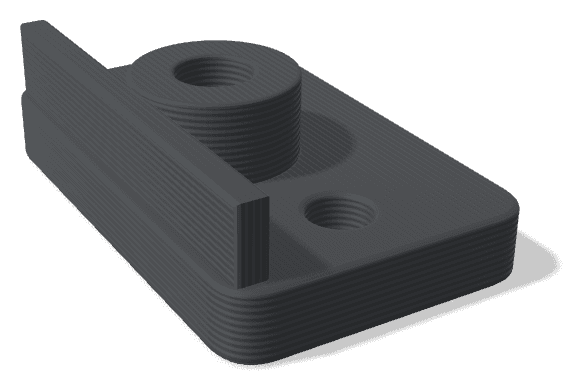
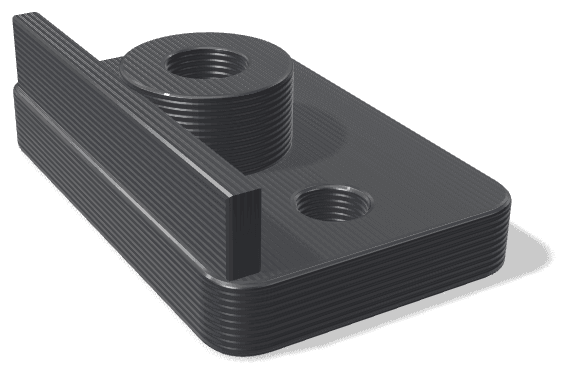
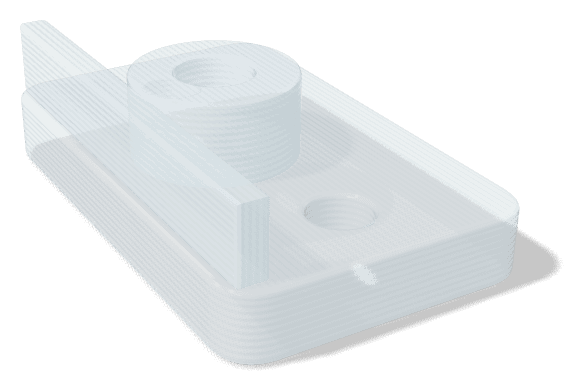
Let's produce with ABS (CF · GF)
Upload your file and we will prepare your quotation for the material, color and quantity.