FDM · Filaments · Composite
PLA / PETG (CF · GF) filament
Stiffer and stronger than standard PLA and PETG.
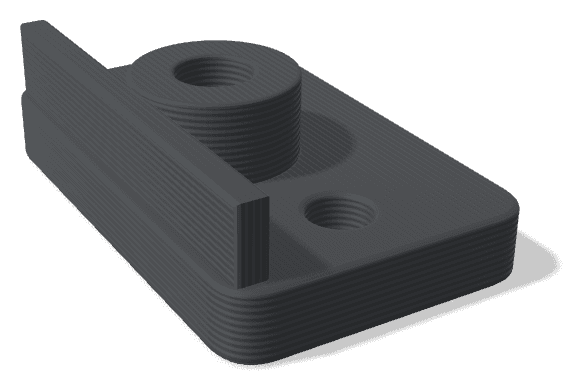
What is PLA / PETG (CF · GF)?
Carbon fiber (CF) or glass fiber (GF) reinforcement increases the filament's strength, stiffness and temperature resistance. PETG CF/GF also offers higher impact resistance. It is preferred for industrial prototyping, engineering applications and functional parts.
Mechanical values vary with the reinforcement ratio; consult our engineers for your application.
- High strength
- Lightweight
High stiffness
Carbon or glass fiber reinforcement gives much stiffer and stronger parts than standard PLA and PETG.
Dimensional stability
Fiber reinforcement reduces shrinkage and bending; suitable for fixtures that need dimensional accuracy.
Attractive matte finish
A matte, professional-looking surface that hides layer lines.
Industrial use
A lightweight alternative to metal for fixtures, jigs, brackets and functional end-use parts.
Technical data
Typical values compiled from common manufacturer datasheets; they vary by brand and grade.
| Reinforcement | Chopped carbon or glass fiber |
|---|---|
| Typical flexural modulus | 3 – 6 GPa (depending on reinforcement) |
Design guidelines for PLA / PETG (CF · GF)
General guidelines for FDM technology. All design guidelines
- Production accuracy at TAݱ0.5% (lower limit ±0.5 mm)
- Minimum wall thickness0.8 mm (supported)
- Unsupported wall1.2 mm
- Smallest detail0.4 mm
- Clearance for moving parts0.4 mm (normal fit)
- Text and logosEmbossed ≥ 0.6 mm, engraved ≥ 0.8 mm
- Minimum hole diameterØ 2 mm
- Unsupported overhang angle≥ 45° from horizontal; flatter surfaces need support
Applications
- Industrial prototypes
- Fixtures and tooling
- Rigid brackets
- Functional end products
Advantages
- High stiffness from carbon/glass fiber
- Dimensional stability, low warping
- Matte, attractive surface with less visible layer lines
Limitations
- Abrasive: requires a hardened nozzle
- Impact strength can be lower than unreinforced grades
Comparison
PLA / PETG (CF · GF) and alternatives
| Property | PLA / PETG (CF · GF) | ABS (CF · GF) | PA-CF | PLA |
|---|---|---|---|---|
| Density | 1.25 g/cm³ | 1.12 g/cm³ | 1.2 g/cm³ | 1.23 g/cm³ |
| Tensile strength | 50 MPa | 50 MPa | 85 MPa | 63 MPa |
| Elongation at break | 3 % | 3 % | 3 % | 20 % |
| Modulus (stiffness) | 4.5 GPa | 5 GPa | 6 GPa | 1.97 GPa |
| Heat deflection (0.45 MPa) | 65 °C | 95 °C | 160 °C | 53 °C |
Values are averages of typical ranges; see each material page for details.
Good to know
Frequently asked questions about PLA / PETG (CF · GF)
What is PLA / PETG (CF · GF)?
Carbon fiber (CF) or glass fiber (GF) reinforcement increases the filament's strength, stiffness and temperature resistance. PETG CF/GF also offers higher impact resistance. It is preferred for industrial prototyping, engineering applications and functional parts.
Is PLA / PETG (CF · GF) heat resistant?
The heat deflection temperature (0.45 MPa) of PLA / PETG (CF · GF) is about 65 °C. This is moderate; enough for everyday use and warm environments.
Can PLA / PETG (CF · GF) be used outdoors?
It usually performs well in short and medium-term outdoor use; for parts exposed to direct sunlight for long periods, UV-resistant materials such as ASA are a better fit.
Which parts are made with PLA / PETG (CF · GF)?
PLA / PETG (CF · GF) is typically used in applications such as industrial prototypes, fixtures and tooling, rigid brackets, functional end products.
Which material can be used instead of PLA / PETG (CF · GF)?
Depending on the application, ABS (CF · GF), PA-CF, PLA can be alternatives. You can see the differences in the comparison tables on the material pages.
Does TAİ Robotik produce with PLA / PETG (CF · GF)?
Yes. We produce with PLA / PETG (CF · GF) using FDM technology. Upload your file to get a quote.
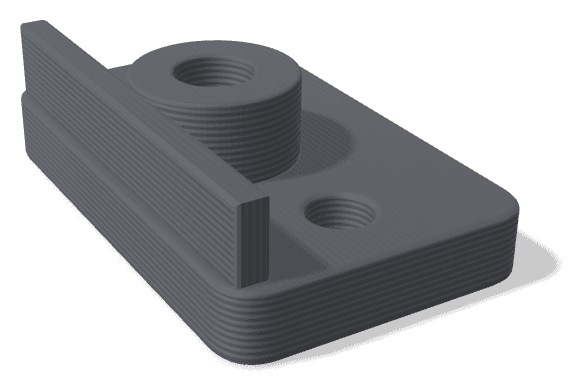
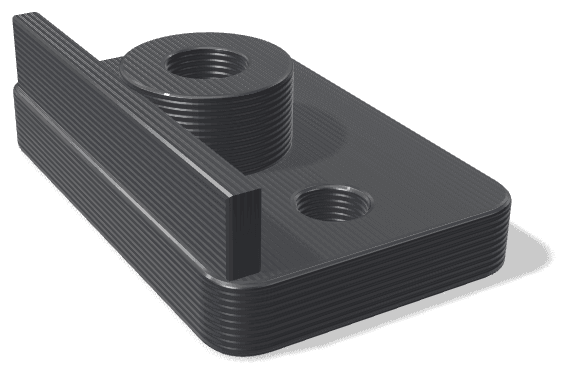
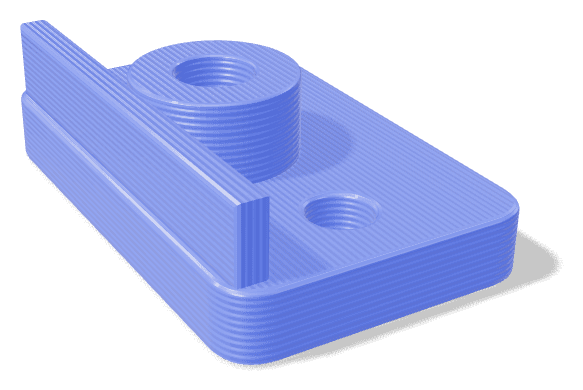
Let's produce with PLA / PETG (CF · GF)
Upload your file and we will prepare your quotation for the material, color and quantity.