Filament and material comparison
Put filaments side by side
PLA, PETG, ABS, ASA, TPU, nylon and more: choose up to three materials and see strength, heat resistance, stiffness, price level, advantages and limitations in one table. Copy the link to share it with your team.
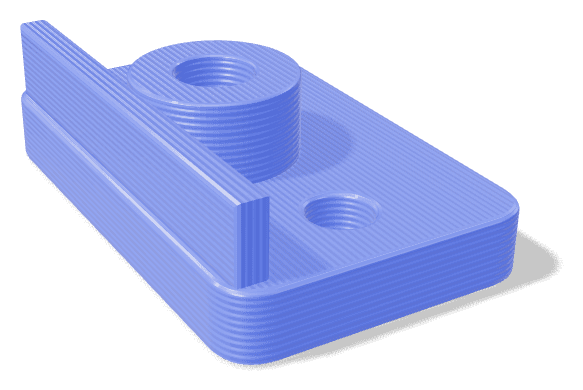
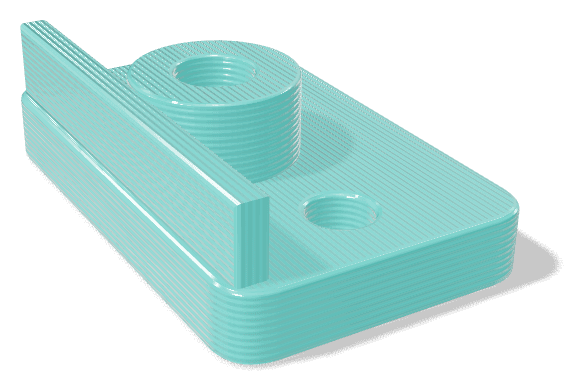
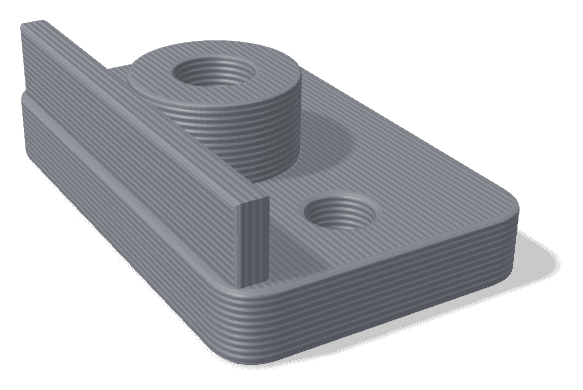
- The most economical and fastest filament to print
- High dimensional stability, does not warp
- Glossy surface and a wide range of colors
- Plant-based biopolymer
- As easy as PLA, much more durable
- Resistant to water and many chemicals
- Transparent option
- High elongation: bends without breaking
- Resists impact and heat
- Easy post-processing: sanding, painting and acetone vapor smoothing
- Proven material in automotive and electronics
- Low heat resistance (~53 °C)
- Brittle under impact
- Can degrade in prolonged sunlight
- Tendency for fine stringing on the surface
- Lower heat resistance than ABS
- Hard to sand
- Requires an enclosure; prone to warping
- Yellows and becomes brittle under UV (ASA is preferred outdoors)
- Odor and emissions while printing
The mint value shows the highest among the selected materials. Values are typical averages.
Filament comparison table
All FDM filaments in one table
Strength, flexibility, stiffness and heat values of 3D printer filaments, plus ease of printing. Click a row to go to the filament's detailed page.
| Filament | Tensile strength (MPa) | Elongation at break (%) | Modulus (stiffness) (GPa) | Heat deflection (0.45 MPa) (°C) | Ease of printing | Typical use |
|---|---|---|---|---|---|---|
| PLA | 63 | 20 | 1.97 | 53 | ●●●●● | Visual prototypes and models · LED projects and lamps |
| PETG | 52 | 83 | 1.07 | 64 | ●●●●● | Functional parts and brackets · Enclosures and boxes |
| PET | 55 | 6 | 2.2 | 70 | ●●●○○ | Transparent enclosures and covers · Parts in contact with liquids and chemicals |
| ABS | 40 | 30 | 1.2 | 73 | ●●●○○ | Automotive parts · Electronic housings |
| ASA | 50 | 30 | 1.85 | 88 | ●●●○○ | Exterior and garden products · Signage and accessories |
| TPU 95A | 35 | 800 | — | — | ●●○○○ | Shoe soles · Phone and device cases |
| Nylon (PA6 / PA12) | 55 | 50 | 1.6 | 80 | ●●○○○ | Gears and bushings · Hinges and clips |
| PA-CF | 85 | 3 | 6 | 160 | ●●○○○ | Fixtures and assembly tooling · Robot gripper fingers |
| PLA / PETG (CF · GF) | 50 | 3 | 4.5 | 65 | ●●●●○ | Industrial prototypes · Fixtures and tooling |
| ABS (CF · GF) | 50 | 3 | 5 | 95 | ●●●○○ | Aerospace parts · Automotive applications |
| PC | 55 | 150 | 1.07 | 80 | ●●○○○ | Mechanical parts · Functional prototypes |
| PC-ABS | 45 | 15 | 2.1 | 105 | ●●●○○ | Electronic housings · Automotive interior trim |
| PP | 25 | 200 | 0.9 | 90 | ●○○○○ | Chemical containers and lab parts · Lids with living hinges |
| Wood-filled PLA | 38 | 3 | 3 | 55 | ●●●●○ | Decorative objects · Architectural models |
| HIPS | 25 | 40 | 1.8 | 85 | ●●●○○ | Soluble support for ABS · Lightweight models |
| PVA | — | — | — | — | ●●○○○ | Soluble support · Prototypes with internal channels |
| Stainless Steel | 530 | 50 | 190 | — | ●○○○○ | Industrial design · Spare part production |
| PPA-CF | 110 | 2 | 8.5 | 220 | ●●○○○ | Under-the-hood parts · High-temperature fixtures |
| PPS-CF | 80 | 2 | 7 | 240 | ●○○○○ | Chemical plant components · Pump and valve parts |
| ULTEM™ 9085 | 69 | 6 | 2.2 | 178 | ●○○○○ | Aircraft cabin components · Air ducts |
| ULTEM™ 1010 | 81 | 3 | 2.8 | 216 | ●○○○○ | Composite layup tooling · Sterilized medical fixtures |
| PEKK | 93 | 4 | 3.3 | 150 | ●○○○○ | Aerospace and space parts · Fuel system components |
| PEEK | 100 | 40 | 4.2 | 150 | ●○○○○ | Aerospace and defense · Medical applications |
Values are typical figures compiled from manufacturer datasheets and literature; they vary with print orientation, settings and brand. Heat deflection temperature is under a 0.45 MPa load.
Selection guide
Which filament for which job?
Economical visual prototype
Everyday use, functional part
Outdoors, sun and UV
Heat resistant (above 100 °C)
Flexible, rubber-like
Rigid, lightweight structural part
Contact with chemicals, oil and fuel
Transparent part
Metal part
Flame retardant
Ready-made comparisons
Most asked about
- PLA vs PETG
- PLA vs ABS
- PETG vs ABS
- ABS vs ASA
- PETG vs ASA
- PLA vs TPU 95A
- ABS vs PC
- PC vs PEEK
- PEEK vs PEKK
- Nylon (PA6 / PA12) vs PA-CF
- PA12 (Nylon 12) vs PA11 (Nylon 11)
- PLA vs Standard resin
- TPU 95A vs TPU / TPE (SLS / MJF)
- ULTEM™ 9085 vs ULTEM™ 1010
- Stainless steel 316L vs Stainless Steel
- Titanium Ti6Al4V vs Aluminum AlSi10Mg
Good to know
Choosing a filament: frequently asked questions
Is PLA or PETG better?
It depends on the use. PLA is the easiest and most economical filament to print; it is ideal for visual prototypes and models but softens above about 55 °C. PETG is tougher and more resistant to impact, moisture and chemicals; it is usually the better choice for functional parts used every day.
What is the strongest filament?
Where stiffness and strength are needed together, carbon fiber reinforced nylon (PA-CF) and PPA-CF stand out. Where impact strength and toughness are needed, PC and unreinforced nylon are better. TPU is preferred for parts that must flex without breaking.
Which filament is heat resistant?
Heat deflection temperature roughly increases from PLA to PETG, ABS and ASA, then carbon fiber reinforced nylons. For applications above 100 °C, reinforced engineering filaments such as PA-CF, PPA-CF and PPS-CF are considered.
Which filament should be used outdoors?
ASA is the best choice for parts exposed to sun and UV light for long periods; it keeps its color and surface. PETG also works well for short and medium-term outdoor use. PLA and ABS can degrade outdoors over time.
Which filament is flexible?
TPU 95A is the most common filament with rubber-like flexibility. It is used for gaskets, bumpers, belts, cases and vibration dampers; it can stretch several times its length without breaking.
What is the difference between ABS and ASA?
Both are engineering plastics that resist heat and impact. ASA is the UV-resistant relative of ABS: it does not yellow or fade in the sun. ABS is preferred for indoor parts and ASA for outdoor parts.
Why are the values in the table not exact?
The values are typical figures compiled from manufacturer datasheets and literature. In 3D printing, strength varies with print orientation, layer height, infill and brand. For critical parts our engineers verify with a test part if needed.
Still undecided?
Tell us your part's operating conditions and our engineers will recommend the best material.